


Traveling to Galas and Competitions: Actionable Tips for UK Swim Clubs
Practical travel tips for UK swim clubs, covering gala entries, transport, kit, team managers and planning for local, national and international meets.
Back to blog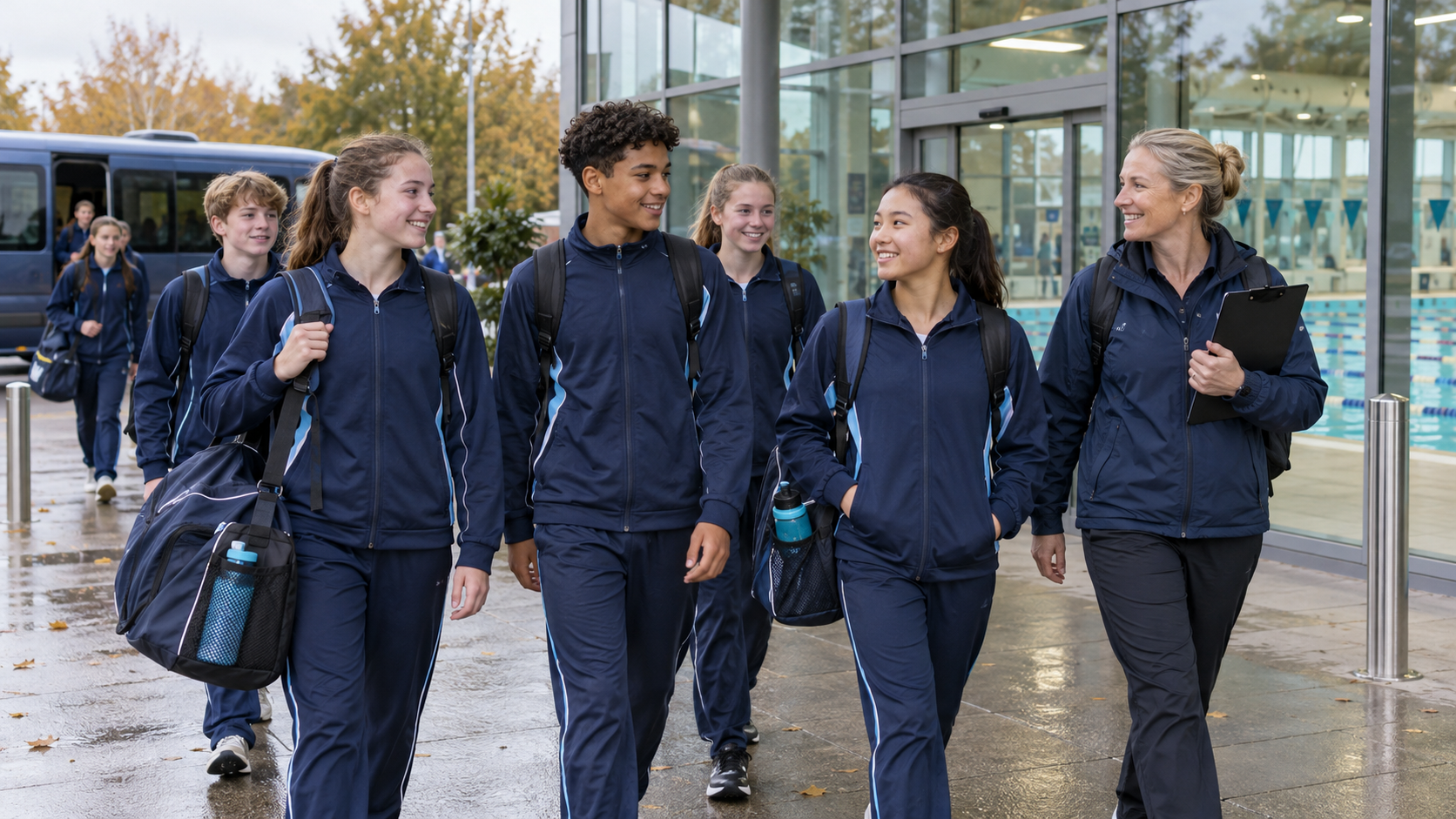
Competition travel is one of the most vibrant parts of swim club life, something members look forward to. Done well, it builds team spirit, gives swimmers clean racing opportunities and keeps parents informed.
Done poorly, it creates last-minute stress, missed races and unnecessary admin for team managers.
This guide covers the main types of UK competition, what travel organisation each level needs, practical rules and kit, common mistakes, and how SwimClub Manager supports the process to help you have a good time and secure the win.
Types of galas and competitions, and what they require
Local and club-level (often Level 4 or unlicensed)
Club championships, intra-club time trials, local novice or friendly galas, and some league rounds close to home. Travel is usually short (most often to the same town or neighbouring clubs).
Requirements are lighter: basic invitation or selection, simple kit, club hat, and reporting to a coach or team manager on arrival.
Times from licensed Level 4 meets can feed into higher entries where accepted.
Regional and county level (often Level 1–3 open meets, county and regional championships)
County championships, regional age-group and senior championships, and many open meets that sit between development and qualification standard.
Travel may mean longer day trips or an overnight stay. Entry is usually done via the club, with qualifying or consideration times from rankings.
Host conditions, warm-up schedules, coach/team manager passes and official ratios matter a lot with county level galas.
Electronic timing and stricter technical standards apply at higher licensed levels.
National league and national championship pathway
National Arena Swimming League (and equivalent league structures), inter-county events, and seasonal national championships (winter short course, summer long course, British/English pathway meets).
These are team or high-stakes individual events. Travel often involves coaches’ selection, team managers, relays, strict eligibility, and sometimes multi-day stays.
League galas need full team lists, lane discipline and clear chain of command poolside. National championships demand confirmed entry times from appropriate licensed meets and careful management of scratches and session attendance.
International competitions
These usually concern whole club or selected members’ trips abroad, such as open meets, dual meets, training camps with racing, or home-nation/international pathway events.
Extra layers apply with international club travel, so you will need:
- International Permit and Clearance (apply in good time, often at least 28 days before departure);
- Valid passports (many countries require six months’ validity beyond return);
- Visas where needed;
- Travel insurance;
- Risk assessment;
- Accommodation;
- Team staff with appropriate DBS;
- Safeguarding and Team Manager training.
Travel organisation activities by level
Here’s a quick list of everything you will have to do for every event type.
Local
Confirm venue and warm-up time; invite or select swimmers; collect availability; simple kit reminder; report to coach/TM on arrival.
Regional / county open meets
Check promoter conditions and qualifying windows; collect event selections; submit club entry (often Hy-Tek); arrange coach/TM passes; invoice entry fees; share programme, parking and arrival guidance; plan transport if shared.
National / league nationals
Coach selection and relay planning; team lists; multi-session logistics; accommodation if needed; stricter withdrawal rules; higher expectation of poolside discipline and ratios.
International
Permits and clearances; passports/visas; insurance and medical forms; detailed itinerary; accommodation and transport; risk assessment; designated team staff; parent briefing and emergency contacts.
At every level, someone must own the entry deadline, the communication to families, and the poolside supervision plan.
Club travel best practices
- Arrive early. Aim for at least 15-20 minutes before warm-up. Late arrival is the fastest way to miss a race or create stress for the whole team.
- Report to the coach or team manager on arrival and before leaving poolside. Swimmers should not disappear to parents or the café without permission during sessions.
- Club kit on poolside: club hats are the standard; club T-shirts/hoodies help identification and team identity. Follow host rules on jewellery and devices.
- Listen for marshalling. Team managers typically send swimmers several races ahead; missing marshalling means a missed swim.
- See the coach before and after races for a race plan and feedback where practical.
- Regarding withdrawals, follow the host club’s process and tell your own coach/TM early, because late scratches can carry fees or affect team scoring.
- Take care of coaches and team manager passes. Only accredited coaches and team managers (with required registration, DBS and, for TMs, relevant qualifications) should be on poolside at licensed meets.
- Send out one clear information email (or app notice) per meet: venue, times, what to bring, who is TM/coach, how to withdraw
Things to bring:
- Racing costume/jammers + spare;
- Club hat (+ spare);
- Goggles (+ spare pair);
- 2–3 towels;
- Poolside shoes / flip-flops;
- Club T-shirt and warm layer;
- Water bottle (refilled often);
- Easy-to-digest snacks (fruit, sandwiches, pasta, avoid relying only on venue food);
- Small entertainment for long waits (cards, books, but follow club rules on phones poolside).
Tips for parents / team managers:
Be aware of the full itinerary, warm-up and session times. Have all the emergency contacts and any medical notes the club needs, as well as the necessary documents like passport copies, insurance, permits, consent forms - use our document management module for that.
Label everything. Poolside is busy and kits go missing more often than we want to admit.
Mistakes to avoid during club travels
The most common mistakes are:
- Missing entry or payment deadlines;
- Assuming “we’ll just turn up” without confirming warm-up, sign-in or parking;
- No spare goggles or hat;
- Swimmers leaving poolside without telling the team manager;
- Parents coaching from the balcony or undermining race plans;
- Incomplete team manager cover (ratios, qualifications, DBS);
- For international trips: leaving permits, passports or insurance until the last week
How SwimClub Manager helps with club travel
SwimClub Manager is built around the gala workflow clubs actually use to create and manage events, integrate Hy-Tek data, and work with invites, confirmations, as well as cover any other communication needs.
With SwimClub Manager you have a team and relay support with relay selection tools to build competitive teams from recorded times.
You can also store trip information, codes of conduct and kit lists; club kit ordering can sit in the same system parents already use.
Whether the next fixture is a local Level 3 open meet or a carefully planned international trip, the clubs that travel calmly are usually the ones with clear ownership, early communication and one place for entries, payments and team information.
SwimClub Manager is designed to be that place so coaches and team managers can focus on the racing, not the spreadsheet.
Get your free trial today and see how helpful SwimClub Manager can be for your club travels!
Ready to save time?
See how SwimClub Manager could work for your club
Try the full system with your own club setup, or book a friendly online demo and we will walk you through the bits that matter most.